"The guilty are allowed, by human laws, bloody as they are, to speak in their own defense before they are condemned. Listen to me, Frankenstein. You accuse me of murder, and yet you would, with a satisfied conscience, destroy your own creature. Oh, praise the eternal justice of man!" (Frankenstein p. 69)
In the novel Brave New World, technology allows humans the power to create life. Because of this power, humans attempt to make the perfect society; however, this society leads to the downfall of many characters. For example, John is an outcast in both the New World and the Reservation causing him to eventually commit suicide.
In both Brave New World and Frankenstein, creation is the central cause of disaster. Victor, the narrator of the story, continuously alludes to his eminent downfall. I believe this downfall will have to do with the creature he created. The creature has also experienced misery and loneliness due to the fact that he is different than all other humans. Victor is at fault for the creature's pain because of his power of creation.
The excerpt above points to the irony of Victor's denial of the creature. Victor wants to kill the creature for the creature's assumed murder of William. But in reality, does killing as a punishment for "murder" really solve anything? Victor needs to own up to his actions because the past can never be erased.
Tuesday, April 3, 2012

Monday, April 2, 2012
Family
"She told me that that same evening William had teased her to let him wear a very valuable miniature that she possessed of your mother. This picture is gone, and was doubtless the temptation which urged the murderer to the deed." (Frankenstein p. 47)
Family plays a very powerful role in Victor's life. A letter from Elizabeth snaps Victor back into reality after his sickness. William's murder motivates Victor to return to his homeland. Victor's loyalty to Elizabeth and his father prevent him from committing suicide. In the novel, Justine is basically an adopted motherly figure to the family; therefore, Victor can never bring himself to believe that Justine is the true murderer.
In the excerpt above, Victor's father explains the motive for the murder in a letter to his son. Justine is deemed the murderer because the same locket placed around William's neck was found in Justine's pocket the next day. Victor refuses to believe the accusations made about Justine because he is completely set that the creature is the murderer. To me, this seems impossible - how could the creature know exactly where Victor's family lived and where they were going to be? It may be a coincidence (after all, Victor did see the creature at the site of the murder), but I believe the creature is innocent. The case made for Justine is more sound than Victor's assumptions about the creature. In the end, Victor and Elizabeth rely on family loyalty and connections to deny accusations.
For some reason, the accusations and death of Justine remind me of the Pretty Little Liars theme song. This is a pretty loose connection, but at least the song mentions a locket and secrets.
Family plays a very powerful role in Victor's life. A letter from Elizabeth snaps Victor back into reality after his sickness. William's murder motivates Victor to return to his homeland. Victor's loyalty to Elizabeth and his father prevent him from committing suicide. In the novel, Justine is basically an adopted motherly figure to the family; therefore, Victor can never bring himself to believe that Justine is the true murderer.
In the excerpt above, Victor's father explains the motive for the murder in a letter to his son. Justine is deemed the murderer because the same locket placed around William's neck was found in Justine's pocket the next day. Victor refuses to believe the accusations made about Justine because he is completely set that the creature is the murderer. To me, this seems impossible - how could the creature know exactly where Victor's family lived and where they were going to be? It may be a coincidence (after all, Victor did see the creature at the site of the murder), but I believe the creature is innocent. The case made for Justine is more sound than Victor's assumptions about the creature. In the end, Victor and Elizabeth rely on family loyalty and connections to deny accusations.
For some reason, the accusations and death of Justine remind me of the Pretty Little Liars theme song. This is a pretty loose connection, but at least the song mentions a locket and secrets.
Sunday, April 1, 2012
Trapped
"I had often, when at home, thought it hard to remain during my youth cooped up in one place, and had longed to enter the world, and take my station among other human beings." (Frankenstein p. 25)
Victor was a typical teenager at one time. Even though his mother destined him to marry Elizabeth, Victor desires to discover the world beyond his home. After the death of his mother, Victor hits the road to study in Ingolstadt to reach his dream of scientific success. The passage above is ironic because Victor travels to Ingolstadt to discover the world and meet new people with different perspectives, but instead, he finds himself trapped in a lab for two years slaving over one project. At the university, Victor totally closes himself off from the world and basically causes himself to go insane. He accomplishes the opposite of what he originally planned.
The excerpt above also serves as foreshadowing for the creation of Frankenstein. Since Victor mentions being "cooped up in one place," the reader is led to believe being trapped somehow leads to the character's repeatedly mentioned downfall. The creation of Frankenstein traps Victor both physically and mentally - as soon as he creates the creature, he can no longer trust himself. Victor realizes that the human brain is capable of things that should be out of our control.
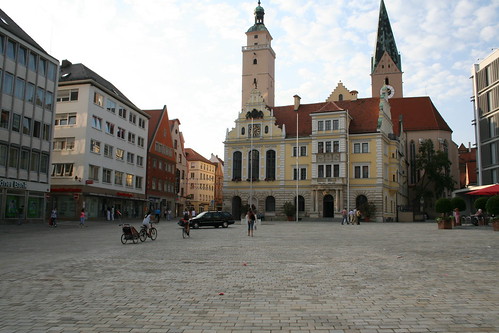 |
| Ingolstadt |
Victor was a typical teenager at one time. Even though his mother destined him to marry Elizabeth, Victor desires to discover the world beyond his home. After the death of his mother, Victor hits the road to study in Ingolstadt to reach his dream of scientific success. The passage above is ironic because Victor travels to Ingolstadt to discover the world and meet new people with different perspectives, but instead, he finds himself trapped in a lab for two years slaving over one project. At the university, Victor totally closes himself off from the world and basically causes himself to go insane. He accomplishes the opposite of what he originally planned.
The excerpt above also serves as foreshadowing for the creation of Frankenstein. Since Victor mentions being "cooped up in one place," the reader is led to believe being trapped somehow leads to the character's repeatedly mentioned downfall. The creation of Frankenstein traps Victor both physically and mentally - as soon as he creates the creature, he can no longer trust himself. Victor realizes that the human brain is capable of things that should be out of our control.
Tuesday, March 27, 2012
101!
"Unhappy man! Do you share my madness? Have you drunk also of the intoxicating draught? Hear me - let me reveal my tale, and you will dash the cup from your lips!" - (Frankenstein - p. 12)
The letters of the novel present an interesting frame story about a man who is extremely similar to Victor, the main character of the central story. Just as Victor, Walton is a man of ambition who seeks personal success within the scientific field; however, Victor seeks to tell his tale to warn Walton of scientific breakthroughs leading to personal downfalls. The excerpt above is the turning point of the frame story - when Victor decides to finally tell his story to Walton.
In the passage above, Shelley uses a metaphor to compare a scientific dream to a luxurious glass of wine. Just like wine, the dream seems to be good on the surface. But eventually, wine and overindulgence can lead to negative effects. After drinking too much wine, a person becomes drunk. In Victor's case, his obsession with animating a corpse causes the creation of a supposed evil creature (I am still not totally convinced the creature is evil). Victor sees that Walton has the same ambition and wishes to warn him of inquiry of knowledge.
 |
| Just finished painting my nails. |
In the passage above, Shelley uses a metaphor to compare a scientific dream to a luxurious glass of wine. Just like wine, the dream seems to be good on the surface. But eventually, wine and overindulgence can lead to negative effects. After drinking too much wine, a person becomes drunk. In Victor's case, his obsession with animating a corpse causes the creation of a supposed evil creature (I am still not totally convinced the creature is evil). Victor sees that Walton has the same ambition and wishes to warn him of inquiry of knowledge.
Tuesday, March 6, 2012
Escape
Mama: "He finally come into his manhood today, didn't he? Kind of like a rainbow after the rain..." (A Raisin in the Sun p. 151)
During Act III, Walter seems to give up hope: all the money is lost, and Mr. Lindner repeatedly asks the family not to move into the neighborhood. At one point, Walter loses it; he decides that the best thing to do is just to accept the money from Mr. Lindner and not put up a fight for the pride of his family and race; however, Mama tells Walter that this is not how she raised her family to be. She wants Walter to be strong and stand up for the hard work and determination of his father. In the end, Walter stands up for his family to Mr. Lindner showing that he has finally developed into a man.
Mama's simile of the rainbow is fitting for this situation. Right before this event, turmoil and chaos grip the household driving Mama to beat her child. The storm created in the household is not settled by money or riches; instead, Walter calms the storm through his words and courage. Without Walter's actions on that day, the family would be trapped in the tiny apartment forever; however, the Younger's are able to overcome social boundaries to reach their ultimate hopes and dreams of escaping the apartment.
During Act III, Walter seems to give up hope: all the money is lost, and Mr. Lindner repeatedly asks the family not to move into the neighborhood. At one point, Walter loses it; he decides that the best thing to do is just to accept the money from Mr. Lindner and not put up a fight for the pride of his family and race; however, Mama tells Walter that this is not how she raised her family to be. She wants Walter to be strong and stand up for the hard work and determination of his father. In the end, Walter stands up for his family to Mr. Lindner showing that he has finally developed into a man.
Mama's simile of the rainbow is fitting for this situation. Right before this event, turmoil and chaos grip the household driving Mama to beat her child. The storm created in the household is not settled by money or riches; instead, Walter calms the storm through his words and courage. Without Walter's actions on that day, the family would be trapped in the tiny apartment forever; however, the Younger's are able to overcome social boundaries to reach their ultimate hopes and dreams of escaping the apartment.
Sunday, March 4, 2012
Money Money Money Money
Mama: "It ain't much, but it's all I got in the world and I'm putting it in your hands. I'm telling you to be the head of this family from now on like you supposed to be.
Walter: You trust me like that Mama?
Mama: I ain't never stop trusting you. Like I ain't never stop loving you." (A Raisin in the Sun p. 107)
 During this excerpt, Mama hands Walter $6,500. Mama tells Walter to put $3,000 in the bank for Bennie, but the rest of the money is given to Walter to use at his own discretion. This is Walter's turning point in the story. After this interaction, Walter no longer bickers with his wife; instead, he takes her out to the movies and restarts their once abusive relationship. Ruth decides to keep the baby because of this change. Walter even decides to stop drinking. Later in the story, Walter buys his mother gardening tools for the new house after being told by the "Welcoming Committee" that the Younger family was not allowed to move into the neighborhood due to the "social standards" of the community. Nothing seems to be able to stop his happiness because he has everything he wants and needs - money.
At the end of Act II, Walter discovers that Willy stole all of the money he invested into the business. Instead of putting some of the money into the bank for Bennie, Walter gives all of the money to Willy. This causes the happiness to end. Mama no longer trusts her son; in desperation, she hits her son for losing her husband's life savings. This is ironic because Mama protests Ruth threatening to beat Travis earlier in the story. It is going to take a lot for Mama to ever trust her son once again, but I'm sure her love will endure through this hard time.
Walter: You trust me like that Mama?
Mama: I ain't never stop trusting you. Like I ain't never stop loving you." (A Raisin in the Sun p. 107)
 During this excerpt, Mama hands Walter $6,500. Mama tells Walter to put $3,000 in the bank for Bennie, but the rest of the money is given to Walter to use at his own discretion. This is Walter's turning point in the story. After this interaction, Walter no longer bickers with his wife; instead, he takes her out to the movies and restarts their once abusive relationship. Ruth decides to keep the baby because of this change. Walter even decides to stop drinking. Later in the story, Walter buys his mother gardening tools for the new house after being told by the "Welcoming Committee" that the Younger family was not allowed to move into the neighborhood due to the "social standards" of the community. Nothing seems to be able to stop his happiness because he has everything he wants and needs - money.
 At the end of Act II, Walter discovers that Willy stole all of the money he invested into the business. Instead of putting some of the money into the bank for Bennie, Walter gives all of the money to Willy. This causes the happiness to end. Mama no longer trusts her son; in desperation, she hits her son for losing her husband's life savings. This is ironic because Mama protests Ruth threatening to beat Travis earlier in the story. It is going to take a lot for Mama to ever trust her son once again, but I'm sure her love will endure through this hard time.
Plants
Mama: "They spirited all right, my children. Got to admit they got spirit - Bennie and Walter. Like this little old plant that ain't never had enough sunshine or nothing - and look at it..." (A Raisin in the Sun - p. 52)

In this play, Mama's beloved plant means a lot more than just a household decoration. This plant is a symbol of Mama's children Bennie and Walter. Bennie dreams of becoming a doctor while Walter desires to open a liquor store in order to better their lives. Through Mama's upbringing, Walter and Bennie have developed ideas outside of Mama's control. For example, Bennie makes Mama extremely upset when she tells her that she no longer believes in God. After Mama's constant guidance like her tending of the plant, she can not believe that her child would believe something like this. Bennie and Walter dream of success because they never experienced anything outside of a poor life just as the plant never received enough sunshine or water. The plant also represents Mama's desire to live in a bigger house with a yard and garden. Mama feels that she is unable to adequately provide for her children and grandchildren in their current home. Moving to a bigger home was a desire she shared with her husband. Mr. Younger gave up this desire after losing a baby. This was a turning point for the family that never allowed them to move forward in their lives.
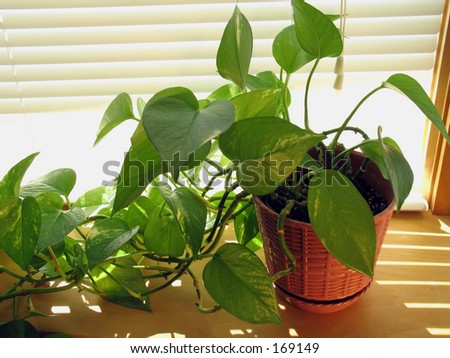
In this play, Mama's beloved plant means a lot more than just a household decoration. This plant is a symbol of Mama's children Bennie and Walter. Bennie dreams of becoming a doctor while Walter desires to open a liquor store in order to better their lives. Through Mama's upbringing, Walter and Bennie have developed ideas outside of Mama's control. For example, Bennie makes Mama extremely upset when she tells her that she no longer believes in God. After Mama's constant guidance like her tending of the plant, she can not believe that her child would believe something like this. Bennie and Walter dream of success because they never experienced anything outside of a poor life just as the plant never received enough sunshine or water. The plant also represents Mama's desire to live in a bigger house with a yard and garden. Mama feels that she is unable to adequately provide for her children and grandchildren in their current home. Moving to a bigger home was a desire she shared with her husband. Mr. Younger gave up this desire after losing a baby. This was a turning point for the family that never allowed them to move forward in their lives.
Subscribe to:
Posts (Atom)