"The guilty are allowed, by human laws, bloody as they are, to speak in their own defense before they are condemned. Listen to me, Frankenstein. You accuse me of murder, and yet you would, with a satisfied conscience, destroy your own creature. Oh, praise the eternal justice of man!" (Frankenstein p. 69)
In the novel Brave New World, technology allows humans the power to create life. Because of this power, humans attempt to make the perfect society; however, this society leads to the downfall of many characters. For example, John is an outcast in both the New World and the Reservation causing him to eventually commit suicide.
In both Brave New World and Frankenstein, creation is the central cause of disaster. Victor, the narrator of the story, continuously alludes to his eminent downfall. I believe this downfall will have to do with the creature he created. The creature has also experienced misery and loneliness due to the fact that he is different than all other humans. Victor is at fault for the creature's pain because of his power of creation.
The excerpt above points to the irony of Victor's denial of the creature. Victor wants to kill the creature for the creature's assumed murder of William. But in reality, does killing as a punishment for "murder" really solve anything? Victor needs to own up to his actions because the past can never be erased.
Showing posts with label irony. Show all posts
Showing posts with label irony. Show all posts
Tuesday, April 3, 2012

Sunday, April 1, 2012
Trapped
"I had often, when at home, thought it hard to remain during my youth cooped up in one place, and had longed to enter the world, and take my station among other human beings." (Frankenstein p. 25)
Victor was a typical teenager at one time. Even though his mother destined him to marry Elizabeth, Victor desires to discover the world beyond his home. After the death of his mother, Victor hits the road to study in Ingolstadt to reach his dream of scientific success. The passage above is ironic because Victor travels to Ingolstadt to discover the world and meet new people with different perspectives, but instead, he finds himself trapped in a lab for two years slaving over one project. At the university, Victor totally closes himself off from the world and basically causes himself to go insane. He accomplishes the opposite of what he originally planned.
The excerpt above also serves as foreshadowing for the creation of Frankenstein. Since Victor mentions being "cooped up in one place," the reader is led to believe being trapped somehow leads to the character's repeatedly mentioned downfall. The creation of Frankenstein traps Victor both physically and mentally - as soon as he creates the creature, he can no longer trust himself. Victor realizes that the human brain is capable of things that should be out of our control.
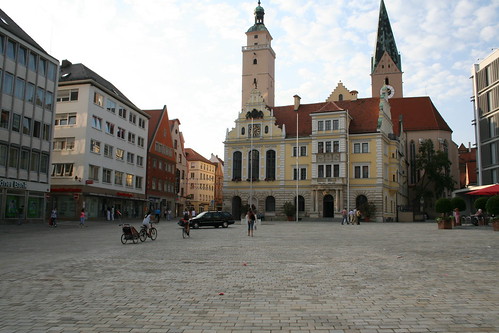 |
| Ingolstadt |
Victor was a typical teenager at one time. Even though his mother destined him to marry Elizabeth, Victor desires to discover the world beyond his home. After the death of his mother, Victor hits the road to study in Ingolstadt to reach his dream of scientific success. The passage above is ironic because Victor travels to Ingolstadt to discover the world and meet new people with different perspectives, but instead, he finds himself trapped in a lab for two years slaving over one project. At the university, Victor totally closes himself off from the world and basically causes himself to go insane. He accomplishes the opposite of what he originally planned.
The excerpt above also serves as foreshadowing for the creation of Frankenstein. Since Victor mentions being "cooped up in one place," the reader is led to believe being trapped somehow leads to the character's repeatedly mentioned downfall. The creation of Frankenstein traps Victor both physically and mentally - as soon as he creates the creature, he can no longer trust himself. Victor realizes that the human brain is capable of things that should be out of our control.
Sunday, March 4, 2012
Money Money Money Money
Mama: "It ain't much, but it's all I got in the world and I'm putting it in your hands. I'm telling you to be the head of this family from now on like you supposed to be.
Walter: You trust me like that Mama?
Mama: I ain't never stop trusting you. Like I ain't never stop loving you." (A Raisin in the Sun p. 107)
 During this excerpt, Mama hands Walter $6,500. Mama tells Walter to put $3,000 in the bank for Bennie, but the rest of the money is given to Walter to use at his own discretion. This is Walter's turning point in the story. After this interaction, Walter no longer bickers with his wife; instead, he takes her out to the movies and restarts their once abusive relationship. Ruth decides to keep the baby because of this change. Walter even decides to stop drinking. Later in the story, Walter buys his mother gardening tools for the new house after being told by the "Welcoming Committee" that the Younger family was not allowed to move into the neighborhood due to the "social standards" of the community. Nothing seems to be able to stop his happiness because he has everything he wants and needs - money.
At the end of Act II, Walter discovers that Willy stole all of the money he invested into the business. Instead of putting some of the money into the bank for Bennie, Walter gives all of the money to Willy. This causes the happiness to end. Mama no longer trusts her son; in desperation, she hits her son for losing her husband's life savings. This is ironic because Mama protests Ruth threatening to beat Travis earlier in the story. It is going to take a lot for Mama to ever trust her son once again, but I'm sure her love will endure through this hard time.
Walter: You trust me like that Mama?
Mama: I ain't never stop trusting you. Like I ain't never stop loving you." (A Raisin in the Sun p. 107)
 During this excerpt, Mama hands Walter $6,500. Mama tells Walter to put $3,000 in the bank for Bennie, but the rest of the money is given to Walter to use at his own discretion. This is Walter's turning point in the story. After this interaction, Walter no longer bickers with his wife; instead, he takes her out to the movies and restarts their once abusive relationship. Ruth decides to keep the baby because of this change. Walter even decides to stop drinking. Later in the story, Walter buys his mother gardening tools for the new house after being told by the "Welcoming Committee" that the Younger family was not allowed to move into the neighborhood due to the "social standards" of the community. Nothing seems to be able to stop his happiness because he has everything he wants and needs - money.
 At the end of Act II, Walter discovers that Willy stole all of the money he invested into the business. Instead of putting some of the money into the bank for Bennie, Walter gives all of the money to Willy. This causes the happiness to end. Mama no longer trusts her son; in desperation, she hits her son for losing her husband's life savings. This is ironic because Mama protests Ruth threatening to beat Travis earlier in the story. It is going to take a lot for Mama to ever trust her son once again, but I'm sure her love will endure through this hard time.
Thursday, December 8, 2011
Moore
"That was the funny thing about beauty, thought Zoe. Look it up in the yellow pages, and you found a hundred entries, hostile with wit, cutesy with warning. But look up truth - ha! There was nothing at all." (p. 362)
Sarcasm and irony - two of my favorite things! And I'm not being sarcastic.
In the excerpt above, Zoe describes the irony of our media-obsessed world. Every magazine placed on the shelves at Target include tips on "beauty" - how to get skinny fast, make your face glow, or get the latest looks; however, what really defines beauty? This sounds extremely cliche, but is anything posted in magazines actually the truth? With the internet, magazines, newspaper, television, Twitter, and Facebook, news on so called beauty spreads quickly, but the truth about beauty is hard to find. Throughout the story, Zoe struggles with how she looks because she is constantly comparing herself to her sister. Zoe relies on her sarcasm to keep her own mind clear of negative, depressing thoughts. Sarcasm and irony are Zoe's ways of avoiding reality. Zoe's discovery of this irony in the modern world helps her to focus not on her own flaws, but the flaws of society.
Sarcasm and irony - two of my favorite things! And I'm not being sarcastic.
In the excerpt above, Zoe describes the irony of our media-obsessed world. Every magazine placed on the shelves at Target include tips on "beauty" - how to get skinny fast, make your face glow, or get the latest looks; however, what really defines beauty? This sounds extremely cliche, but is anything posted in magazines actually the truth? With the internet, magazines, newspaper, television, Twitter, and Facebook, news on so called beauty spreads quickly, but the truth about beauty is hard to find. Throughout the story, Zoe struggles with how she looks because she is constantly comparing herself to her sister. Zoe relies on her sarcasm to keep her own mind clear of negative, depressing thoughts. Sarcasm and irony are Zoe's ways of avoiding reality. Zoe's discovery of this irony in the modern world helps her to focus not on her own flaws, but the flaws of society.
Wednesday, November 16, 2011
Wolff
"Up ahead they saw some lights off the road. It was a tavern. Outside in the parking lot there were several jeeps and trucks. A couple of them had deer strapped across their hoods." (Hunters in the Snow p. 196 ¶ 157)
Well, Kenny, Tub, and Frank definitely proved their combined intelligence multiple times in the story. I mean, the story starts with Frank and Kenny trying to run over Tub while it is dangerously icy outside. I'm not really sure who gave these people guns, but whoever did needs to take them back or something.
I thought this quote was ironic. After a day of unsuccessful "hunting" (I'm not even sure you can call it that...), Tub and Frank pull into a bar while Kenny is bleeding to death in the back of their truck. The irony is established when the narrator states that some of the cars "had deer strapped across their hoods." During the trip, Kenny, Tub, and Frank did not kill shoot any deer. Instead of a deer, Tub and Frank have Kenny as their number one kill. While many people go into the bar and drink, they leave the deer strapped on the car; Tub and Frank leave Kenny in the car like he is their prize. They do not even care about how Kenny is doing, they just know that they are cold. Great friends I'd say. Whoever said that Frank is the most likable character in class: I totally disagree with you. I think Frank is a horrible person who only influences negative activity. For example, he encourages Tub to eat after Tub admits he has a problem with overeating. And on a lighter note, Frank is also a pedaphile who is in love with a fifteen year old girl. Oh, and he is going to leave his wife for this girl. Like him now?
Well, Kenny, Tub, and Frank definitely proved their combined intelligence multiple times in the story. I mean, the story starts with Frank and Kenny trying to run over Tub while it is dangerously icy outside. I'm not really sure who gave these people guns, but whoever did needs to take them back or something.
I thought this quote was ironic. After a day of unsuccessful "hunting" (I'm not even sure you can call it that...), Tub and Frank pull into a bar while Kenny is bleeding to death in the back of their truck. The irony is established when the narrator states that some of the cars "had deer strapped across their hoods." During the trip, Kenny, Tub, and Frank did not kill shoot any deer. Instead of a deer, Tub and Frank have Kenny as their number one kill. While many people go into the bar and drink, they leave the deer strapped on the car; Tub and Frank leave Kenny in the car like he is their prize. They do not even care about how Kenny is doing, they just know that they are cold. Great friends I'd say. Whoever said that Frank is the most likable character in class: I totally disagree with you. I think Frank is a horrible person who only influences negative activity. For example, he encourages Tub to eat after Tub admits he has a problem with overeating. And on a lighter note, Frank is also a pedaphile who is in love with a fifteen year old girl. Oh, and he is going to leave his wife for this girl. Like him now?
Wednesday, September 21, 2011
Amuricah!
"thy sons acclaim your gorious name by gorry
by jingo by gee by gosh by gum..."
("next to of course god america i" - e.e. cummings)
Monday, September 19, 2011
Ask Me in the 21st Century
"My name is Ozymandias, king of kings;
Look on my works, ye Mighty, and despair."
("Ozymandias" - Percy Bysshe Shelley)
Ozymandias seems like a pretty mean dude. He is characterized through many details such as "cold," "frown," and "wrinkled lip." Personally, I would not want to be under his command. However, the above excerpt is pretty ironic. These words have stood the test of time; however, that is the only thing that has made it through the many years. Around the statue is a "colossal wreck" which contains nothing. No great power or empire exists from Ozymandias' time. His statue stands alone among the sand - no person despairs at his work because all of it is gone. Words may be eternal, but being eternal does not always mean they are true.
I'm not exactly sure what the image of the "hand" and the "heart" is referring too. I was thinking that "the hand that mocked him" was a metaphor to the people that never thought that he could cause such destruction or have such a powerful rule. Maybe "the heart that fed" is the people who served this tyrant. The "hand" and "heart" are synecdoche because one part of a person represents an entire group of people. A synecdoche is effective because the speaker is placing the blame at the "hand" and "heart" of those who mocked the tyrant.
Look on my works, ye Mighty, and despair."
("Ozymandias" - Percy Bysshe Shelley)
 |
| This picture is obviously real. |
I'm not exactly sure what the image of the "hand" and the "heart" is referring too. I was thinking that "the hand that mocked him" was a metaphor to the people that never thought that he could cause such destruction or have such a powerful rule. Maybe "the heart that fed" is the people who served this tyrant. The "hand" and "heart" are synecdoche because one part of a person represents an entire group of people. A synecdoche is effective because the speaker is placing the blame at the "hand" and "heart" of those who mocked the tyrant.
Wednesday, September 7, 2011
The Zoo?
"...It seems to him there are
a thousand bars; and behind the bars, no world."
("The Panther" - Rainer Maria Rilke)
The poem of the panther really caused a lot of controversy in my small group today. When I first read through the poem, I honestly just thought it was pretty straight forward... just your regular old panther trapped inside a cage at the zoo. However, from the circus to people who can not reach their potential, a wide variety of responses were mentioned.
This poem relies heavily on hyperbole and dramatic imagery. In the excerpt above, it states that behind the bars of the cage, there was "no world." Now obviously, if the cage exists on Earth, the world exists beyond the zoo. However, this exaggeration adds effect of confinement to the poem. The panther feels trapped and has never seen the outside world; therefore, to him, there is no escaping the prison life he must lead.
Another literary device used in the poem is irony. I thought it was a little ironic that Rilke placed an image of a "ritual dance" in the poem. Maybe this is a little far-fetched, but this reminded me of tribes of Indians. I think Indians are being compared to animals trapped in captivity. Just as animals live in captivity, Indian tribes were placed in Reservations as if they were animals. This cruel act is still criticized today.
a thousand bars; and behind the bars, no world."
("The Panther" - Rainer Maria Rilke)
The poem of the panther really caused a lot of controversy in my small group today. When I first read through the poem, I honestly just thought it was pretty straight forward... just your regular old panther trapped inside a cage at the zoo. However, from the circus to people who can not reach their potential, a wide variety of responses were mentioned.
This poem relies heavily on hyperbole and dramatic imagery. In the excerpt above, it states that behind the bars of the cage, there was "no world." Now obviously, if the cage exists on Earth, the world exists beyond the zoo. However, this exaggeration adds effect of confinement to the poem. The panther feels trapped and has never seen the outside world; therefore, to him, there is no escaping the prison life he must lead.
Another literary device used in the poem is irony. I thought it was a little ironic that Rilke placed an image of a "ritual dance" in the poem. Maybe this is a little far-fetched, but this reminded me of tribes of Indians. I think Indians are being compared to animals trapped in captivity. Just as animals live in captivity, Indian tribes were placed in Reservations as if they were animals. This cruel act is still criticized today.
Monday, August 8, 2011
Deep Questions
"You can imagine what a shock this was. Before Miss Lucy's reply, we'd all been glaring at Marge, really furious she'd asked such a rude question - to us, she might as well have asked if Miss Lucy had ever attacked anyone with an axe." Never Let Me Go (p. 68)
This is my theory so far in the book: Madame is scared of all the children because they are all secretly her clones and that's how she knows what they are thinking. Pretty sure that is a legit theory.
Anyways, the excerpt above exemplifies how the average 8-year-old's brain works. Someone colors out of the lines, and suddenly, he is the kid who no one likes. Okay, maybe that is an exaggeration, but you know what I mean. The narrator, Kathy, uses an exaggeration (or hyperbole) to show how the question really bothered everyone. Honestly, I can imagine a normal child asking a question like this... I mean after all, even I can remember being curious about things I wasn't really supposed to know about. Since cigarettes were obviously a "no-no" topic, I'm sure questions were on all of the children's minds. Kathy exaggerates by comparing asking if Miss Lucy had used cigarettes with asking if Miss Lucy was ever a murderer. Pretty extreme, I'd say.
I thought this quote was a little ironic as well. The children obviously equate cigarettes with murder and death. I think this is no misprint of the author. Just as Brave New World warned people of alcohol and drugs, Ishinguro is warning modern day people of the danger of cigarettes. It is ironic in the fact that passage really has a double meaning - 1) asking questions about banned topics is unforgivable and 2) cigarettes are a dangerous thing.
Subscribe to:
Posts (Atom)