Jim: "Poor little fellow, he must feel sort of lonesome."
Laura: "Well, if he does he doesn't complain about it. He stays on a shelf with some horses that don't have horns and all of them seem to get along nicely together." ("The Glass Menagerie" Scene 7 - p. 1281)
A glass unicorn is the perfect choice for this play. Unicorns are mythical creatures that only possess one difference from horses - a horn. In the excerpt, Jim worries that the unicorn will not fit in with the other horses because he is so different; however, Laura tells Jim not to worry because the unicorn doesn't seem to mind. The unicorn is a symbol for Laura as a person. Laura also has a visible difference that makes her different from the rest of society - her physical handicap. Just as the unicorn, Laura does not feel self-conscious about her handicap anymore because she has become accustomed to her way of life. Besides her physical handicap, Laura also possesses a mental illness which prevents her from moving forward in her life. This does not allow her to fit in just as the unicorn's horn will never disappear. Because she is so different, Laura feels lonely and becomes attached to her glass collection. Jim attempts to coax Laura out of her shy state, but Laura soon returns to her own world when Jim tells Laura that he is engaged. In my opinion, Jim is a pretty big jerk.
Speaking of unicorns, here is one of my favorite unicorn moments of all time!
Tom: "Man is by instinct a lover, a hunter, a fighter, and none of those instincts are given much play at the warehouse!" ("The Glass Menagerie" Scene 4 - p. 1253)
Tom is obviously unhappy with his life - everyday, Tom does the exact same routine making little money at the warehouse and living with his mother. Amanda mentions that her children are "different;" however, is Tom really as different as she thinks? In the excerpt above, Tom dreams of bigger and better things beyond the warehouse. It seems as if Amanda gave up on Tom because her plans with Laura did not work out. Amanda considers Tom a failure without even giving him a chance. This quote foreshadows Tom's plan of leaving his family to join The Union of Merchant Seamen. The only problem with this plan is Tom is the bread-winner of the family; without his paycheck, the light bill will not be paid. Tom's plan shows that he is a selfish character without any regard for his mother or sister. Even though his mother treated him as a slave, it is still not right for him to leave his family behind especially not Laura. Tom is not a lover, hunter, or fighter, and personally, I do not believe he can do any of these things on his own. Because of his mother, he is extremely dependent on the family while his family relies on him.
Amanda: "I've seen such pitiful casses in the South - barely tolerated spinsters living upon the grudging patronage of sister's husband or brother's wife! - stuck away in some little mouse-trap of a room - encouraged by one in-law to visit another - little birdlike women without any nest - eating the crust of humility all their life!" ("The Glass Menagerie" Scene 2 - p. 1243)
In "The Glass Menagerie," Laura suffers from many different obstacles. At the beginning of the story, we find that Laura is crippled and wears a leg brace. Later, Laura reveals that she dropped out of business school because of her shyness. Laura has an extremely hard time fitting in with society; I believe she has a mental condition such as autism which causes her to be timid and obsessed with one thing such as the glass horse.
In the excerpt above, Amanda, Laura's mother, tells Tom her worries about Laura. Amanda is worried that Laura will never find a husband and spend her life dependent on the family. Amanda uses a metaphor to describe her daughter as a lost bird without any nest. Amanda worries that without a feeling of belonging, Laura will possess low self-esteem; however, this is ironic because Laura already possess a low-esteem due to her mother's pressure and outlandish actions.
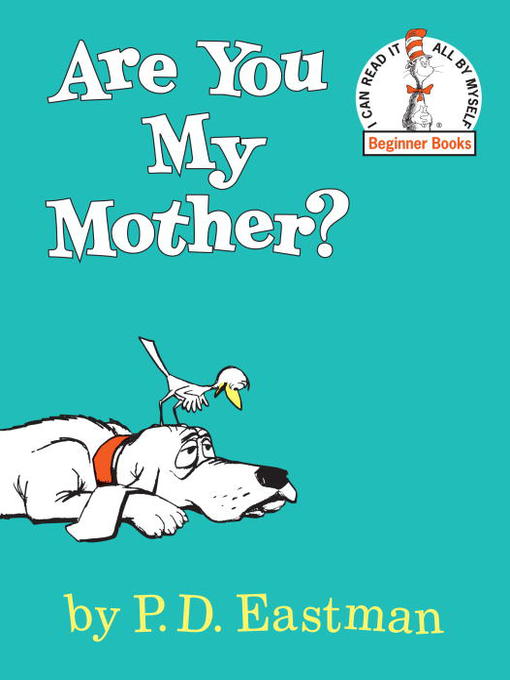
This part of the story reminds me of a Dr. Seuss book called "Are You My Mother?" Throughout the story, the little bird tries to find its' home and family just as Laura attempts to find a husband she can belong to.
"I love Aliena; say with her that she loves me; consent with both that we may enjoy each other: it shall be to your good; for my father's house and all the revenue that was old Sir Rowland's will I estate upon you, and here live and die a shepherd." (V.ii.69)
In this play, Oliver is a dynamic character. Through the acts, he experiences changes that morph his personality. In Act I, Oliver treats his brother Orlando like dirt. Instead of sending him to school to get an education, he treats him as a peasant. At one point, Oliver agrees to kill his younger brother in order to please Duke Frederick. After agreeing to this, Oliver experiences a change in personality. Duke Frederick's threats and mistreatment toward Orlando actually make Oliver want to defend his brother. Another event that changed Oliver is when he falls in love with Aliena. In the excerpt above, Oliver says that he will give up his former life in order to live the life of a shepherd with his girl. This means that Oliver actually cares about someone other than himself and things other than riches. Also, he decides to give his estate to Orlando - this is a major jump. In Act V, Oliver loves his brother enough to leave his own possessions to him. Without dynamic character's, the story line would never progress and no theme would be projected to the reader.
Touchstone: "It is said, 'many a man knows no end of his goods:' many a man has good horns, and knows no end of them." (III.iii.47)
I would have to say, Touchstone is by far my favorite character in this play. Instead of a jester, I think Touchstone should just become a philosopher. But sadly, philosopher's were probably considered the fools of that time anyways.
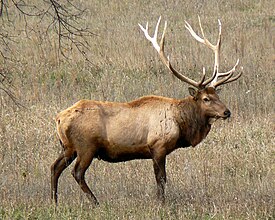
In Touchstone's speech in Act III, he keeps referring to "horns." He states that "as horns are odious they are necessary." Horns are given to deer and other creatures in order to fight and protect themselves. Without knowledge of how to use these horns properly, they are useless. The same thing applies to humans. We are all given talents and gifts, but without the proper knowledge, these gifts may go to waste. We must find purpose and meaning for our talents to make a difference in the world. I found it a little ironic that Touchstone says this right before he is about to be married by Oliver to Audrey so that he can easily divorce her. Touchstone seems so moral, but he proves to also be a true fool.
Duke Senior: "Hath not old custom made this life more sweet Than that of painted pomp? Are not these woods More free from peril than the envious court?" (II.i.17)
Native to the life of the city, Duke Senior is totally out of his element in the wild. First of all, Duke Senior and Jacques show pity for killing a deer in the forest as dinner. A true huntsman would not even care about the life of the deer. But yet, Duke Senior still praises the country life.
In the excerpt above, Shakespeare uses rhetorical questions to illustrate Duke Senior's current attitude about his situation. Since he was banished from his own kingdom, the Duke is attempting to make the best of his situation. He simply states that his life in the forest is free of worry and care. Also, his surroundings are more natural and not as showy and ornate. The Duke literally has no responsibilities or work. Instead, he can focus on one thing - survival. Rhetorical questions emphasize the thought process of the Duke to the audience allowing the audience to feel more connected with the characters.
When flipping through a magazine, expensive ads line the pages with beautiful men and women displaying various name-brand clothing and shoes. These flawless models seem to live the perfect life possessing beauty, money, and fame; however, behind the surface, many models suffer from drug abuse, anorexia, and self-confidence issues. Media and ads in our world today perfectly display the difference between appearances and reality. Taking a closer look at the seemingly perfect lives of celebrities reveals a world filled with hardship and suffering. Shakespeare’s “Othello,” The Hunger Games, and the 2016 Olympic Games in Rio de Janeiro, Brazil all contain one timeless theme: appearances and reality are not always the same. In the play “Othello, the Moor of Venice,” appearance and reality constantly contradict one another. Iago spreads lies and rumors about each of the characters creating malicious violence and drama. One specific instance from the play is when Othello listens to a conversation between Iago and Cassio. Iago purposely designs the conversation so that Othello believes that Cassio is speaking about Desdemona in a derogatory manner; however, Cassio only speaks of Bianca, his prostitute. During the conversation, Cassio mocks Bianca, stating, “I marry her! What a customer! I prithee bear some charity to my wit. Do not think it so unwholesome. Ha, ha, ha” (IV.i.117-118). After hearing this line, Othello believes that Cassio is only using his wife for pleasure and does not truly love her. In reality, Cassio has done no wrong to Othello; however, Iago causes the conversation to appear in a different manner. At the end of the scene, Bianca arrives with the handkerchief, which Othello gave to Desdemona.
Othello being manipulated by Iago.
Othello assumes that Desdemona gave Cassio the handkerchief who in turn carelessly handed it off to his prostitute. This false appearance of reality seals Desdemona’s fate – death by Othello.
In the novel The Hunger Games, Suzanne Collinsuses the manipulation of appearance in order to hide the reality of a dark situation. The story is set thousands of years into the future after the destruction of the modern world. Civilization splits into twelve districts that are ruled by the Capitol. In order to enforce order and prevent rebellion, the Capitol requires two tributes from each district to fight to the death in the hunger games. This event is televised so that every district views the violence occurring. Before the event, a parade featuring the twenty-four tributes takes place in the Capitol. The tributes wear flashy costumes that appeal to the rich, self-centered people of the Capitol. Katniss Everdeen, a tribute from District 12, states, “the people of the Capitol are going nuts, showering us with flowers, shouting out names, our first names, which they have bothered to find on the program” (Collins 70). The hunger games mean that death is certain for twenty-three of the contestants; however, the people of the Capitol ignore this fact, glorifying the event with money and riches. The Capitol forces the games to appear positive for the nation, bringing peace and fame to the districts. In reality, the games cause murder, hardship, and family tension. The Capitol attempts to keep order through this convoluted view, but rebellion soon follows.
The surrounding slums of Rio de Janeiro, Brazil.
One of the most witnessed spectacles in the world is the Olympic Games. Every country in the world dreams of making an appearance or even hosting the Olympics because this event brings not only fame but also wealth to the host. In 2016, the Olympic Games will take place in Rio de Janeiro, Brazil, a country gripped by crime and poverty. Statistics show that around 20 people are assassinated per day in Rio. In addition, Rio holds the largest gap of economic inequality in the world (Zibechi). With all eyes on the city, the government must act to hide the reality of the situation in Rio and keep visitors safe. The government of Brazil plans to build walls around the poorest areas of Rio to contain the poor; however, thousands of people are murdered or disappear each day causing many to believe a genocide to be taking place. Vera Malaguti, a general secretary of Rio Institute of Criminology, describes the government’s plan as “a project of urban cleansing under the guise of restoring order to the city, for the benefit of the World Cup, the Olympics, and all capital investment that is flowing into Rio” (Zibechi). Through murder and deceit, Brazil will gain this ideal image demanded by the world. In reality, the view seen on the television will greatly differ from the events taking place on the other side of the wall.
In a world filled with technology, appearances and reality tend to differ more than ever. In “Othello,” The Hunger Games, and the 2016 Olympic Games in Rio, these differences led to negative results. Without knowledge of the truth, people are led in the wrong direction causing little progress. For example, in the State of the Union Address given by the president, only positive, encouraging words are spoken to the citizens of the United States. Without the full truth, America has little chance to grow and become more successful. In order to succeed as a nation, America must fully understand the reality of all positive and negative situations. When this occurs, appearance and reality will become one.
Obama giving the State of the Union Address.
Works Cited
Collins, Suzanne. The Hunger Games. New York: Scholastic, 2008. Print.
Zibechi, Raúl. "Rio De Janeiro: Control of the Poor Seen as Crucial for the Olympics." Upside Down World. 20 Jan. 2010. Web. 13 Feb. 2012. <http://upsidedownworld.org/main/news-briefs-archives-68/2325-rio-de-janeiro-control-of-the-poor-seen-as-crucial-for-the-olympics>.