Wednesday, April 11, 2012

Adam and Eve

"I read and re-read the letter, and some softened feelings stole into my heart, and dared to whisper paradisiacal dreams of love and joy, but the apple was already eaten, and the angel's arm bared to drive me from all hope."  (Frankenstein p. 139)

After Victor receives a letter from Elizabeth, he feels conflicting emotions.  On one hand, Elizabeth is his best friend whom he loves.  He wishes to marry her and live a long and prosperous life with her; however, Victor knows deep in his heart that this can never be so.  In the excerpt, Shelly uses an allusion referring to the Bible to describe Victor's fate.  Victor says that "the apple was already eaten," meaning that his dream of living with Elizabeth was ruined by the creature's threat of destroying his life.  This image refers to the creation of Adam and Eve, and Eve eating from the forbidden tree.  This action sealed the fate of humanity, just as Victor's creation sealed his own fate of misery and despair.  Victor believes that the creature is going to kill him on his wedding night; however, the creature has other plans of murdering his wife.  Instead of focusing on protecting his wife, Victor prepares to defend himself.  Ultimately, this egotistic attitude leads to Victor's downfall.  Victor isn't necessarily totally self-centered; he does feel despair when thinking about Elizabeth's reaction to her newly-made husband's death.  But in reality, if Victor hadn't gone into solitude after creating the creature, he probably could have prevented the death of his entire body of loved ones. 

Darkness

"The cup of life was poisoned for ever; and although the sun shone upon me, as upon the happy and gay of heart, I saw around me nothing but a dense and frightful darkness, penetrated by no light but the glimmer of two eyes that glared upon me."  (Frankenstein p. 134)

After discovering the death of his friend Henry Clerval and  being convicted for the murder, Victor welcomes prison and even death.  Henry was his best friend; the creature took this friend away due to Victor's lack of completing the creature's companion.

To describe the intensity of his grief, Shelly uses an antithesis of images.  A bright description of the weather is soon clouded by the dark thoughts of Victor.  The same sentence structure is used in both sentences to emphasize the difference between appearance and reality.  This is the point where Victor realizes that he no longer has control of his life; since Victor did not complete the female creature, the creature now has the will to ruin every aspect of his life.  Killing Henry and sending Victor to jail was just the first of his actions to ruin the scientist's life.  Not only does Victor fear the future, he also is haunted by the images of the murders the creature had commited - William, Justine, Henry, and eventually his own wife.    

Nature vs. Nurture

"Thanks to the lessons of Felix and the sanguinary laws of man, I had learned how to work mischief."  (Frankenstein p. 103)

One thing that has stuck throughout this book is that not one character blames himself for anything.  Granted, a lot of things are not in the character's control, but still, you would think someone would own up to their mistakes.  Not even Victor blames himself at the end of the novel because he says, "During these last days I have been occupied in examining my past conduct; nor do I find it blameable" (161).  Sooo, building a creature who is a murderer... no big deal...

This quote is another example of the theme nature vs. nurture.  In the scene, the creature places the necklace from William's neck in Justine's pocket to frame her for the murder.  This is no accident; the creature fully realizes that she will suffer for the crime.  But, oh no, this is not the poor creature's fault because he was good by nature.  Felix was the one who taught him evil/clever things.  The creature's lonesome upbringing caused him to do evil things, not his nature.

 In my opinion, the creature does these evil acts out of bitterness towards the world.  Yes, everyone rejects him because of his appearance, but many people experience this because they are different from society.  Not all people who are rejected by the world become mastermind serial killers.  If everyone who was ever rejected became a murderer, we would all be dead. 

Tuesday, April 3, 2012

Mother of the Year? Maybe not.

"I imagined that they would be disgusted, until, by my gentle demeanor and conciliating words, I should first win their favour, and afterwards, their love."  (Frankenstein p. 81)

Here are 7 reasons why the creature is good-natured:
  1. Attempts to sing with the birds, or "the little winged animals" (71)
  2. Does not react with violence when he is attacked by the villagers
  3. Experiences emotions of "pain and pleasure" while observing the family (75)
  4. Stops stealing food out of the family's pantry after discovering that they are poor
  5. Chops fire wood to relieve part of the family's daily labours
  6. Grows emotionally attached to the family even though he never actually meets them
  7. Learns the language of the family "to win their favour" (81)
From Victor's perspective, the creature appears inherently evil; however, these actions reveal the creature's true nature of kindness and compassion.  Ironically, Victor's ignorance and denial of the creature turned him into the monster he says he is today.  Victor did not create another creature so his current creation could feel accepted by at least one person.  In fact, Victor just totally left the creature on its' own as soon as it was born.  Victor's nurturing style caused loneliness and confusion for the creature.  Victor should probably avoid becoming a full time mom - obviously, it didn't end well the first time.

Creation

"The guilty are allowed, by human laws, bloody as they are, to speak in their own defense before they are condemned.  Listen to me, Frankenstein.  You accuse me of murder, and yet you would, with a satisfied conscience, destroy your own creature.  Oh, praise the eternal justice of man!"  (Frankenstein p. 69)

In the novel Brave New World, technology allows humans the power to create life.  Because of this power, humans attempt to make the perfect society; however, this society leads to the downfall of many characters.  For example, John is an outcast in both the New World and the Reservation causing him to eventually commit suicide.

In both Brave New World and Frankenstein, creation is the central cause of disaster.  Victor, the narrator of the story, continuously alludes to his eminent downfall.  I believe this downfall will have to do with the creature he created.  The creature has also experienced misery and loneliness due to the fact that he is different than all other humans.  Victor is at fault for the creature's pain because of his power of creation.

The excerpt above points to the irony of Victor's denial of the creature.  Victor wants to kill the creature for the creature's assumed murder of William.  But in reality, does killing as a punishment for "murder" really solve anything?  Victor needs to own up to his actions because the past can never be erased.           

Monday, April 2, 2012

Family

"She told me that that same evening William had teased her to let him wear a very valuable miniature that she possessed of your mother.  This picture is gone, and was doubtless the temptation which urged the murderer to the deed."  (Frankenstein p. 47)

Family plays a very powerful role in Victor's life.  A letter from Elizabeth snaps Victor back into reality after his sickness.  William's murder motivates Victor to return to his homeland.  Victor's loyalty to Elizabeth and his father prevent him from committing suicide.  In the novel, Justine is basically an adopted motherly figure to the family; therefore, Victor can never bring himself to believe that Justine is the true murderer.

In the excerpt above, Victor's father explains the motive for the murder in a letter to his son.  Justine is deemed the murderer because the same locket placed around William's neck was found in Justine's pocket the next day.  Victor refuses to believe the accusations made about Justine because he is completely set that the creature is the murderer.  To me, this seems impossible - how could the creature know exactly where Victor's family lived and where they were going to be?  It may be a coincidence (after all, Victor did see the creature at the site of the murder), but I believe the creature is innocent.  The case made for Justine is more sound than Victor's assumptions about the creature.  In the end, Victor and Elizabeth rely on family loyalty and connections to deny accusations.

For some reason, the accusations and death of Justine remind me of the Pretty Little Liars theme song.  This is a pretty loose connection, but at least the song mentions a locket and secrets. 


Sunday, April 1, 2012

Trapped

"I had often, when at home, thought it hard to remain during my youth cooped up in one place, and had longed to enter the world, and take my station among other human beings." (Frankenstein p. 25)
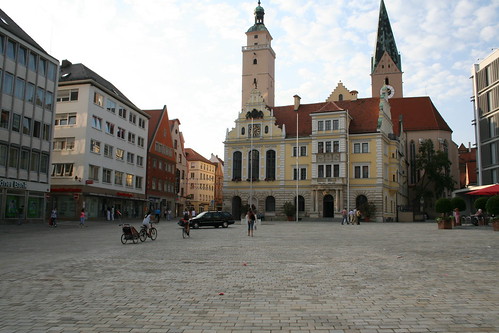
Ingolstadt

Victor was a typical teenager at one time.  Even though his mother destined him to marry Elizabeth, Victor desires to discover the world beyond his home.  After the death of his mother, Victor hits the road to study in Ingolstadt to reach his dream of scientific success.  The passage above is ironic because Victor travels to Ingolstadt to discover the world and meet new people with different perspectives, but instead, he finds himself trapped in a lab for two years slaving over one project.  At the university, Victor totally closes himself off from the world and basically causes himself to go insane.  He accomplishes the opposite of what he originally planned.

The excerpt above also serves as foreshadowing for the creation of Frankenstein.  Since Victor mentions being "cooped up in one place," the reader is led to believe being trapped somehow leads to the character's repeatedly mentioned downfall.  The creation of Frankenstein traps Victor both physically and mentally - as soon as he creates the creature, he can no longer trust himself.  Victor realizes that the human brain is capable of things that should be out of our control.